Many companies and real estate developers in Saudi Arabia are looking for a way to make their project visible and clear to the customer before they even take a single step inside the location, and this is where 360 virtual tours come in as a practical solution that combines professional photography with digital interactivity. This technology is no longer limited to villas and apartments, but has extended to showrooms, restaurants, offices, and hotels in Riyadh, Jeddah, and Dammam. In this guide, we explain how to choose the right service for the nature of your project, the difference between the available packages, and the most common mistakes project owners make when contracting with a service provider, along with practical steps and a comparison table to help you make an informed decision.
What Are 360 Virtual Tours and How Do They Serve Your Business?
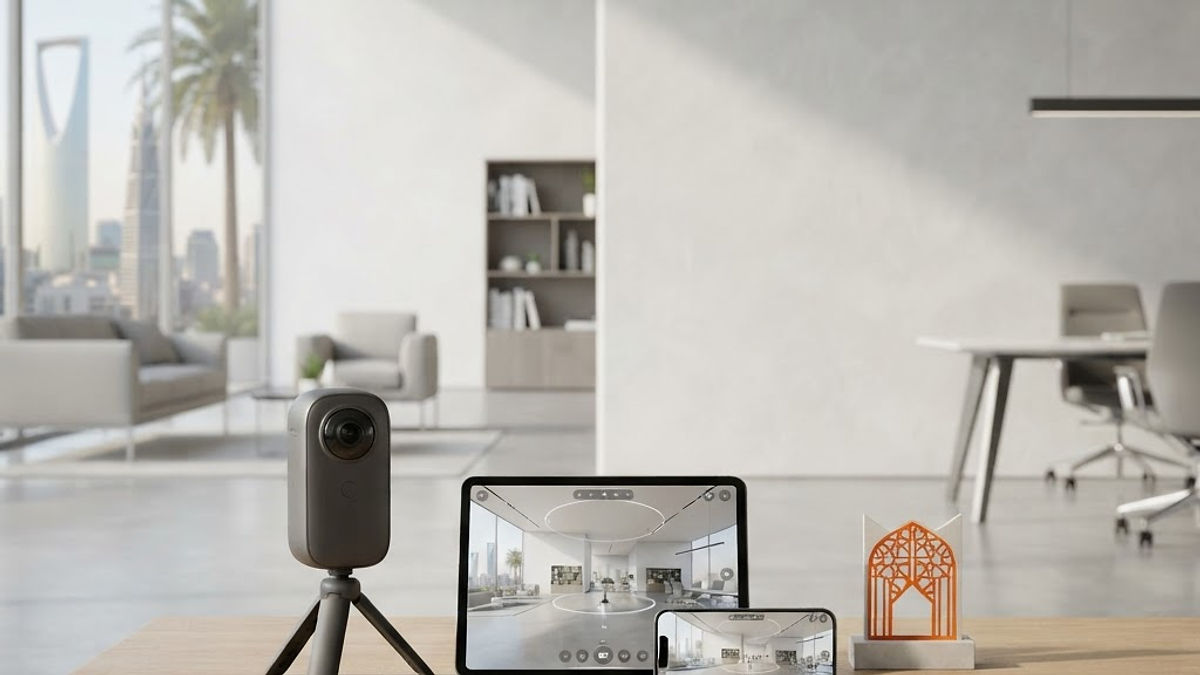
A 360 virtual tour is an interactive visual experience that allows the visitor to move digitally within the space, navigating between rooms or sections with just a click, without needing to visit in person. This experience is built from a set of 360-degree images or video clips that are integrated using specialized software to form a connected, seamless scene that the customer can view from their phone or computer at any time.
How the Technology Works Behind the Scenes
The process begins by photographing every point in the location with a dedicated wide-angle camera, then the images are uploaded to a program that merges them (stitching) to produce a spherical scene that can be navigated freely. Afterward, interactive elements are added, such as transition points between rooms, text information, and external links, making the experience closer to an actual visit.
Why Commercial Photography Differs from Residential Photography
Commercial projects often require different lighting than villas and apartments, because commercial spaces such as showrooms or restaurants include industrial lighting and intricate decor that require special camera adjustments. Also, the number of points that need to be photographed in a large commercial project such as a hotel or car showroom will be greater compared to a single residential apartment, which affects both time and cost. If you're looking for more details on pricing, you can check out the Virtual Tours Cost Guide in Saudi Arabia to learn about the factors influencing price.
Benefits of Virtual Tours for Real Estate and Commercial Facilities
One of the most important benefits of virtual tours for real estate is that they reduce the number of non-serious field visits and give the customer a realistic idea of the space before contacting the sales team. In the commercial sector in general, the benefit extends to several aspects:
- Providing an interactive exploration experience that keeps the visitor on the page longer compared to static images.
- Making it easier to showcase the project to clients outside the city or outside the Kingdom without needing a field trip.
- Supporting the sales team with an interactive tool that can be sent via a direct link in correspondence or presentations.
- Enhancing trust in the project by showing its real details accurately, away from fragmented images.
- The ability to integrate the tour with the website or social media accounts to increase reach.
These benefits make virtual tours a complementary tool rather than a replacement for traditional photography, which is why many projects combine the tour with professional photographs to achieve a comprehensive result. It's also useful to check out the Commercial Photography Guide for Businesses in Saudi Arabia to understand the difference between the two services and how to benefit from them together.
Shooting Virtual Tours in Saudi Arabia: What Does Your Project Need?
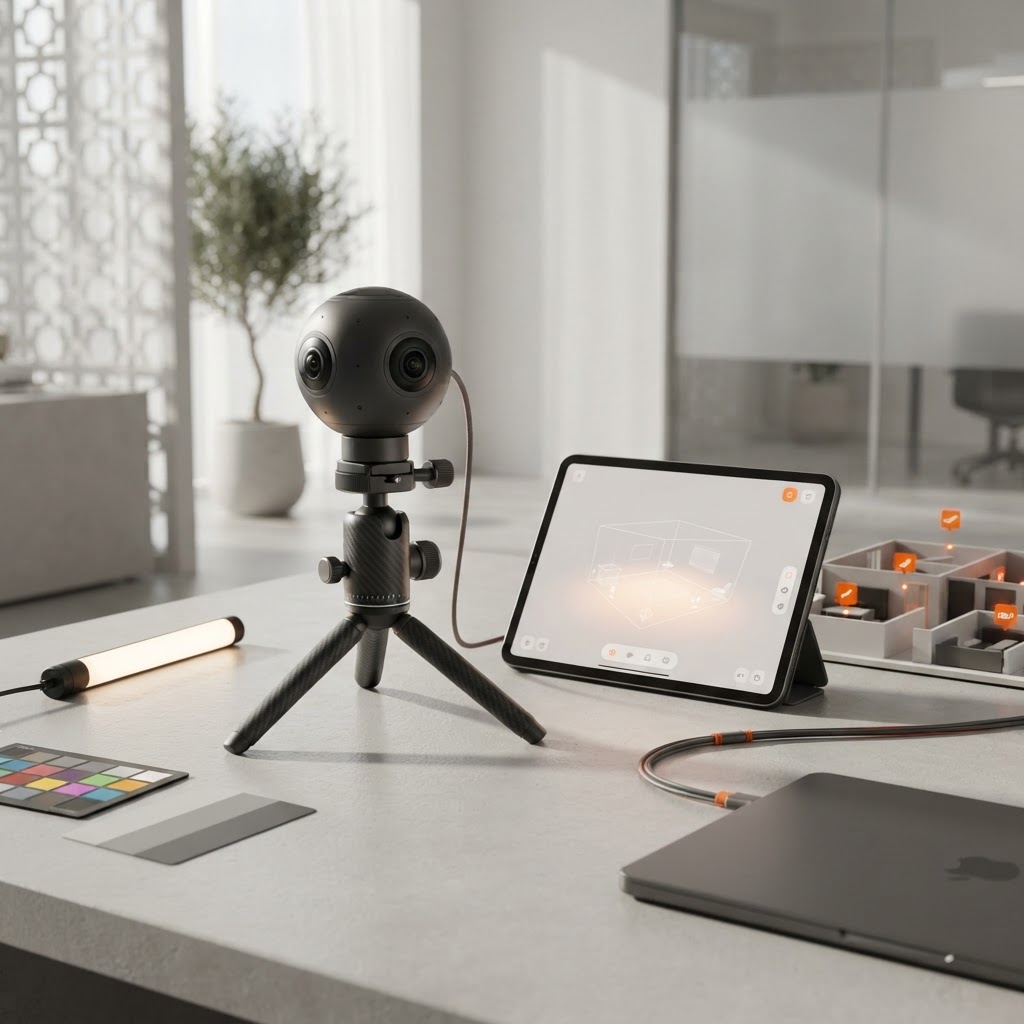
Before starting to shoot virtual tours in Saudi Arabia, it's important to determine the type of project and the size of the space, because this determines the number of shooting points and the equipment required. Large commercial showrooms such as car dealerships or hotels require advance planning for the shooting route, while small offices or clinics may need a shorter session.
Technical Requirements Before the Session
It's preferable for the location to be operationally ready before shooting, meaning removing any temporary obstacles, adjusting the general lighting, and ensuring the cleanliness of the spaces visible in the frame. Some commercial projects also benefit from incorporating aerial shots of the exterior location, and here you can refer to the Drone Aerial Photography Services Guide for Projects in Saudi Arabia to learn how this type of photography adds an extra dimension to the digital presentation.
The Difference Between Shooting in Riyadh, Jeddah, and Dammam
The technology itself doesn't differ from one city to another, but the nature of projects may vary. Riyadh sees a high density of office projects and large commercial showrooms, Jeddah has a diversity between coastal facilities, hotels, and restaurants, while Dammam's projects are often linked to industrial and commercial facilities connected to the oil and service sector. This diversity makes it essential for the service provider to understand the nature of each sector before implementation, rather than applying a single approach to all projects.
360-Degree Technology for Business: Where Is It Used?
360-degree technology for business has become a popular option across several sectors within the Saudi market, and among the most notable practical uses are:
- Real estate projects: Showcasing villas, apartments, and new buildings to prospective clients before an actual visit, as detailed in the Virtual Tours for Real Estate Guide in Saudi Arabia.
- Restaurants and cafes: Showing interior decor and seating to attract visitors before deciding to book or visit.
- Hotels and resorts: Showcasing rooms and shared facilities interactively, helping the guest book with greater confidence.
- Commercial showrooms and exhibition halls: Such as car or furniture showrooms that need to display products within a large space.
- Offices and companies: Using the tour in presentations for investors or potential partners.
Steps to Implement a 360 Virtual Tour Project
To ensure a satisfactory result, it's preferable for the project to go through clear steps from start to final publication:
- Determining the goal of the tour, whether it's for sales, marketing, or an internal presentation to investors.
- An exploratory visit to the location by the photography team to determine the number of points and the appropriate shooting route.
- Preparing the space and adjusting the lighting and decor before the shooting day.
- Carrying out the shooting session using dedicated 360-degree cameras.
- Processing and merging the images in specialized software to produce the interactive tour.
- Adding interactive elements such as transition points and text information if needed.
- Reviewing and testing the tour on different devices before final publication.
- Publishing the tour on the website or social media platforms, or sending it as a direct link to clients.
These steps can be adjusted based on the size of the project, but they represent a practical framework that any commercial or real estate project can rely on when planning a virtual tour photography project.
Comparison Table Between Types of 360 Virtual Tour Packages
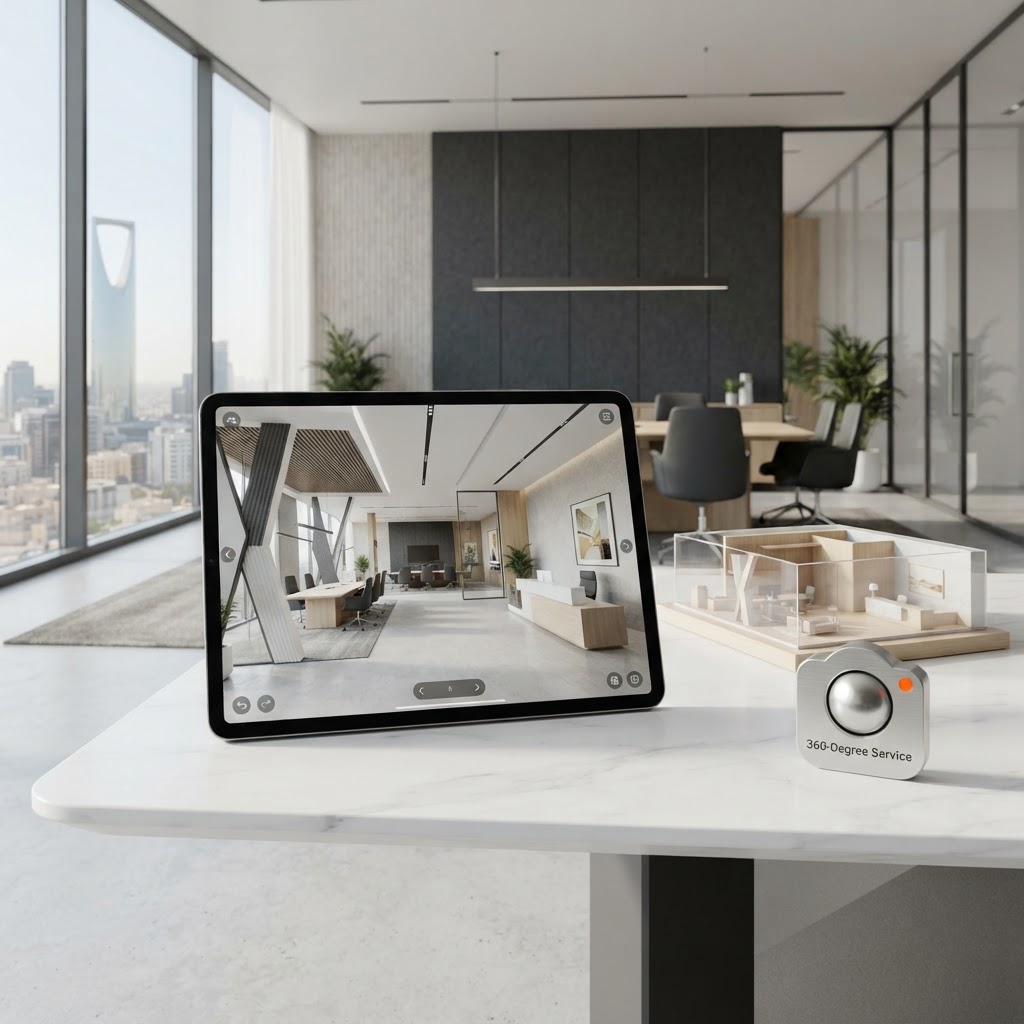
The packages available in the market differ based on the level of interactivity, number of points, and required add-ons. The following table outlines the basic differences in general without specifying prices:
| Package Type | Suitable For | Key Features |
|---|---|---|
| Basic Package | Small offices, clinics, independent shops | A limited number of shooting points with a simple, shareable tour |
| Medium Package | Restaurants, residential apartments, small showrooms | Broader shooting points with additional interactive elements and text information |
| Advanced Package | Hotels, car showrooms, large real estate projects | Comprehensive coverage of the space with the ability to integrate aerial shots and advanced marketing elements |
Common Mistakes When Contracting a 360 Commercial Photography Service Provider
One of the most common mistakes project owners make when requesting 360 commercial photography in Riyadh or any other city is dealing with a provider who doesn't have sufficient experience specifically in the commercial sector, resulting in an outcome that doesn't match the nature of the space. Other common mistakes include:
- Not preparing the location before the session, leading to unwanted elements appearing in the tour.
- Relying on equipment unsuitable for the actual size of the space.
- Neglecting the review stage before publication, which may cause feedback issues after the work is delivered.
- Not linking the tour to the website or social media platforms, reducing the project's benefit from it.
Avoiding these mistakes starts with choosing a service provider with a clear working methodology, and it's preferable for them to be part of an integrated visual production system, including photography, editing, and digital production, as explained in the Media Production Services Guide in Saudi Arabia.
How to Choose the Right Service Provider for Your Project?
When comparing virtual tour service providers, it's preferable to focus on some practical points that genuinely reflect the quality of the work:
- Reviewing previous work in the same sector, such as restaurants, offices, or real estate.
- Making sure the steps and expected delivery timeframe are clear.
- Asking the provider about the possibility of integrating aerial photography or commercial photography within the same project, saving time and cost, as discussed in the Professional Photography Services Guide in Saudi Arabia.
- Making sure the tour can be easily embedded in the website or social media platforms.
Frequently Asked Questions
How long does a 360 virtual tour shooting session take for a commercial project?
The duration varies depending on the size of the project and the number of points that need to be photographed. A small office requires less time than a hotel or large showroom that requires moving between several sections.
Can the virtual tour be integrated with the company's website?
Yes, most modern virtual tours support direct embedding within website pages, in addition to the ability to share them as an independent link via social media or email.
What is the difference between a virtual tour and a regular marketing video?
A video shows a fixed path determined by the photographer, while a virtual tour allows the visitor to control their own path and navigate freely between the points they wish to explore, which makes it more interactive.
Is 360-degree technology suitable for small projects as well?
Yes, simplified packages can be designed to suit small shops and offices, reducing the number of shooting points without affecting the quality of the final experience.
Can the virtual tour be updated after the project's decor changes?
In the event of significant changes to the space, it's preferable to re-shoot only the affected points so the tour remains an accurate reflection of the project's current state.
Conclusion
360 virtual tours represent a practical tool for showcasing commercial and real estate projects in the Saudi market in an interactive way that gives the customer greater confidence before an actual visit, whether the project is a hotel in Jeddah, a commercial showroom in Riyadh, or a facility in Dammam. If you're planning to implement a virtual tour photography project in Saudi Arabia with professional quality suited to the nature of your business, you can get in touch with the VENETS AGENCY team and request a customized quote via the Virtual Tours Services page to discuss your project details and the appropriate steps for implementation.